Lead-Free vs. 63/37 Eutectic Solder: Finding the Real Cutoff
I saw a post claiming NASA only trusts 63/37 solder in space, with a video showing why. I solder lead-free on purpose, to keep lead exposure down at home. The post raised a question I’d never worked through: is 63/37 worth the trade-off, and if so, when?
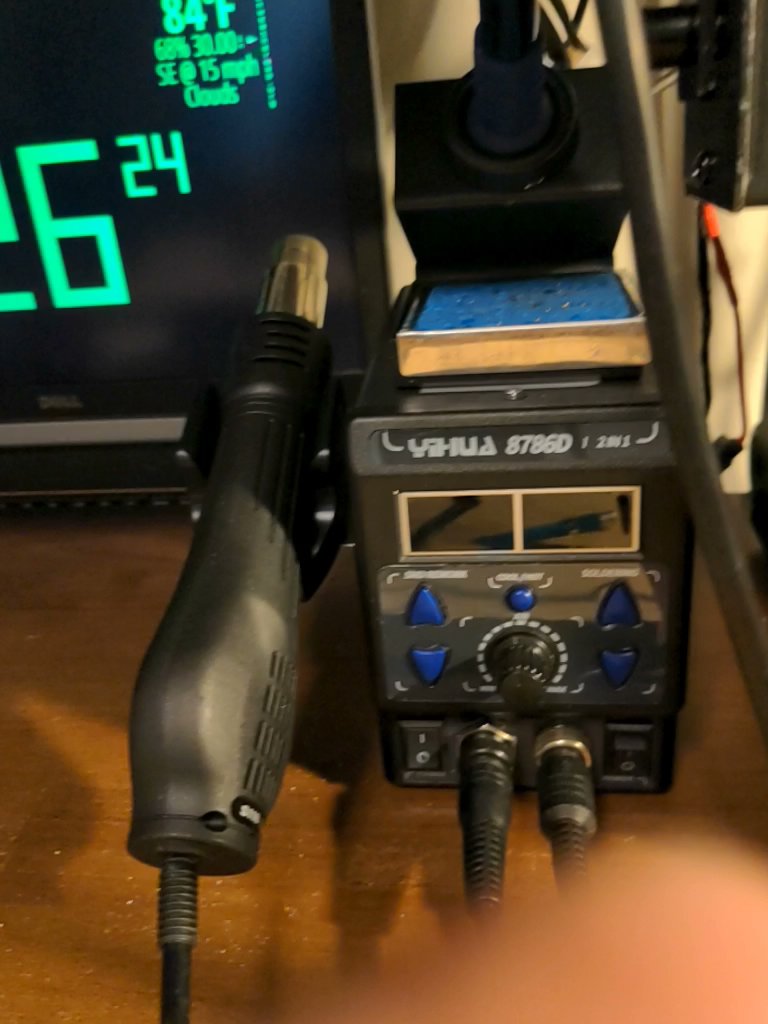
Here’s the post that got me looking into this:
What’s Actually True Here
The metallurgy and the whisker physics check out. “NASA only trusts 63/37,” as a named policy, is looser than what the standards actually say. 63/37 tin-lead solder (63% tin, 37% lead) is the eutectic composition: the one ratio where the alloy melts and freezes at a single, sharp temperature, 183°C, instead of over a range. Shift the ratio, like the common 60/40 blend, and you get a melting range instead of a point. AIM Alloys’ own datasheet puts 60/40 at 183°C solidus, 190°C liquidus. A joint disturbed anywhere in that pasty, half-solid window sets dull, grainy, and mechanically weak.
The whisker claim checks out too, and it’s an old problem worth being precise about. In 1946, Howard Cobb of the Aircraft Radio Corporation published “Cadmium Whiskers,” describing cadmium-plated capacitors in WWII-era radio equipment growing hair-thin metal filaments that shorted plate to plate. The industry moved to tin and zinc platings, and those grew whiskers too.
The well-documented failures are almost all on pure-tin electroplated finishes: component leads, connector shells, capacitor frames, relay parts, not bulk solder fillets. Whiskers do grow from bulk tin-lead solder, but NASA’s own literature treats them as dramatically smaller and generally negligible under terrestrial conditions.
In 1998, a commercial satellite (Galaxy IV) failed in orbit in an incident attributed to a tin-whisker short, a centerpiece case in NASA Goddard’s whisker policy. Growth is worse in the vacuum and thermal cycling space hardware lives in. Multiple GSFC specs and IPC’s space addendum now restrict pure tin as a final finish on flight hardware, and military connector practice follows the same restriction. Lead in the solder alloy also suppresses whisker growth in the joint itself, a smaller, secondary benefit, not the primary reason leaded solder stuck around in aerospace.
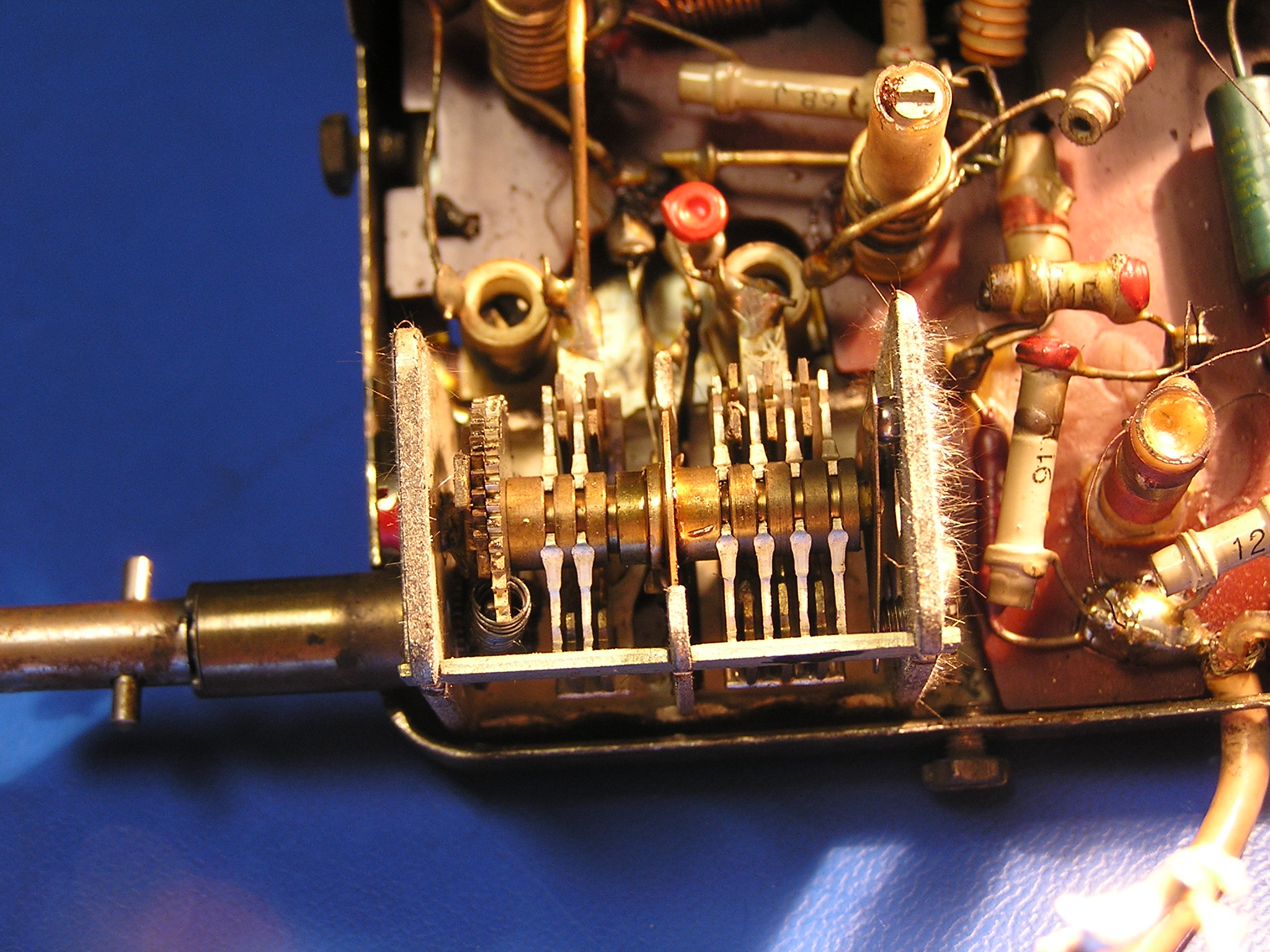 Whiskers over 8mm long, growing from the tin-plated frame of this 1960s variable air-spaced capacitor. Same class of metal-whisker shorting Cobb documented on cadmium in the 1940s, on a different metal. Photo courtesy of I. Hernefjord and NASA Goddard’s tin whisker archive.
One thing the post got wrong: it’s not that “NASA trusts” a standard called out by name. The physics is right. The document name is outdated.
Cancelled: NASA-STD-8739.3, NASA’s own hand-soldering workmanship standard, formally cancelled 2011-12-08, per NASA’s own standards page. Current: IPC J-STD-001, with its Space and Military Applications Electronic Hardware Addendum, under NASA’s current workmanship framework per NASA-STD-8739.6.
None of this is a standard a ham bench has to meet. These are flight-hardware finish and workmanship controls, driven by vacuum exposure, multi-year unrepairable missions, and qualification cost. What carries over is narrower: the same alloy, used voluntarily because it’s nicer to hand-solder with, not because a shack faces the failure mode the standard exists for.
A counterargument worth stating: for ordinary terrestrial ham work, a properly made lead-free joint is reliable, and tin-whisker field failures are rare outside conditions that don’t match most kit builds or RF connectors. Most of what actually goes wrong with a bad connector, cold joints, poor strain relief, an under-wetted shield, has nothing to do with alloy choice. Switching solder doesn’t touch the pure-tin plated leads already on most modern parts; that’s a finish decision made by whoever plated the part. Soldering 63/37 onto one of those leads is mixed-alloy soldering at the joint, not the clean eutectic fillet described above. It still runs cooler and wets well, but it isn’t a flight joint. This isn’t “one whisker away from a satellite failure.” What’s left is a process preference, not a reliability upgrade backed by data.
Why This Matters on a Ham Bench
RoHS didn’t put me on lead-free. It’s a directive restricting hazardous substances in equipment placed on the market, aimed at manufacturers and importers, never a rule for my own bench. Wanting to keep lead exposure down at home did, and that’s reason enough on its own. What I hadn’t worked through is where 63/37 is worth reaching for anyway.
The workmanship case for 63/37 is real but narrow: process latitude, not a data-backed reliability upgrade. Common lead-free alloys like SAC305 are themselves close to eutectic (liquidus around 217–220°C), so the pasty-range story above isn’t the real difference; practical iron setpoints run well above liquidus for both alloys anyway. The actual difference is the lower temperature itself, 183°C versus roughly 217°C+, and an easier feel at the iron that hand-solderers, myself included, widely report without a controlled comparison behind it. That matters most on small, heat-sensitive parts and on RF connectors, where a joint is harder to inspect once it’s inside the shell. A connector likely to need rework needs dust control from the start regardless, which the health section below covers.
Where the Health Trade-off Actually Sits
Lead solder’s health risk for normal hand soldering isn’t what it looks like at first. Lawrence Berkeley National Lab’s soldering safety guidance states: “because of the relatively low temperatures in electronic soldering, fumes from these metal constituents themselves are not normally a concern.” That covers a clean joint at normal tip temperature, not overheating, grinding, or aggressive rework. The visible smoke at the iron is flux (rosin) breaking down, not lead vapor; rosin fume is what NIOSH recommends monitoring and ventilating for. For this process, the dominant lead exposure route is hand-to-mouth ingestion of dust and oxide, not inhalation of metal fume.
That changes what “safe enough” means for hands, and it changes one thing I was doing wrong. NIOSH researchers state it directly: “despite longstanding recommendations for workers to ‘wash hands with soap and water,’ no efficacy studies show this to be a completely effective removal method for lead.” Washing is a hygiene habit, not a decontamination step. The same paper’s handwipe method reached “nearly 100%” removal in testing. NIOSH licensed that formulation to Hygenall Corporation in 2008; independent trials of the resulting “Lead Off” product line measure around 99% effective, for about the cost of a few spools of solder. That closes the hands part of the loop only. Irons, brass wool, tip cleaners, mats, and clothing are separate reservoirs the hand-wipe research doesn’t touch. Filing or sanding a leaded joint puts dust on exactly those surfaces.
A counterargument to my own framework: strip out whiskers and NASA finish policy, per the section above, and what’s left is a lower process temperature and a subjective wetting preference, partly recoverable without lead through a temperature-controlled tip, technique, and modern lead-free fluxes. Any leaded solder on a home bench, even used narrowly, seeds a lead reservoir in tools and surfaces that hand hygiene doesn’t clear, in the same house I went lead-free to protect. A defensible answer to “which one” might just be always lead-free at home, with technique and fixturing standing in for the alloy.
Here’s where I’ve landed, as a working rule, not a settled one:
- Default stays lead-free for most kit builds and general work. The process latitude doesn’t outweigh adding lead to the house.
- 63/37 stays on the table for RF connectors and heat-sensitive small parts, only when I trust the joint on the first pass and control dust from the start. Not a reliability claim, and not if the joint is likely to need rework: dust control has to be in place before, not after.
- Whenever leaded solder is out: dedicated tools that don’t cross over to lead-free work; real decontamination (Lead Off or equivalent, not soap) for hands and the bench surface; no filing or sanding a leaded joint without dust control; no food or drink at the bench, either alloy.
- Kids soldering unsupervised: lead-free only, until they’re old enough to run the decontamination step themselves.
I’m not fully talked out of the always-lead-free case above. Saying so plainly beats a tidier ending.
Hope this helps! 73!
If this helps you, check out my adblob to support the work.