HAARP Transmissions
August 2026
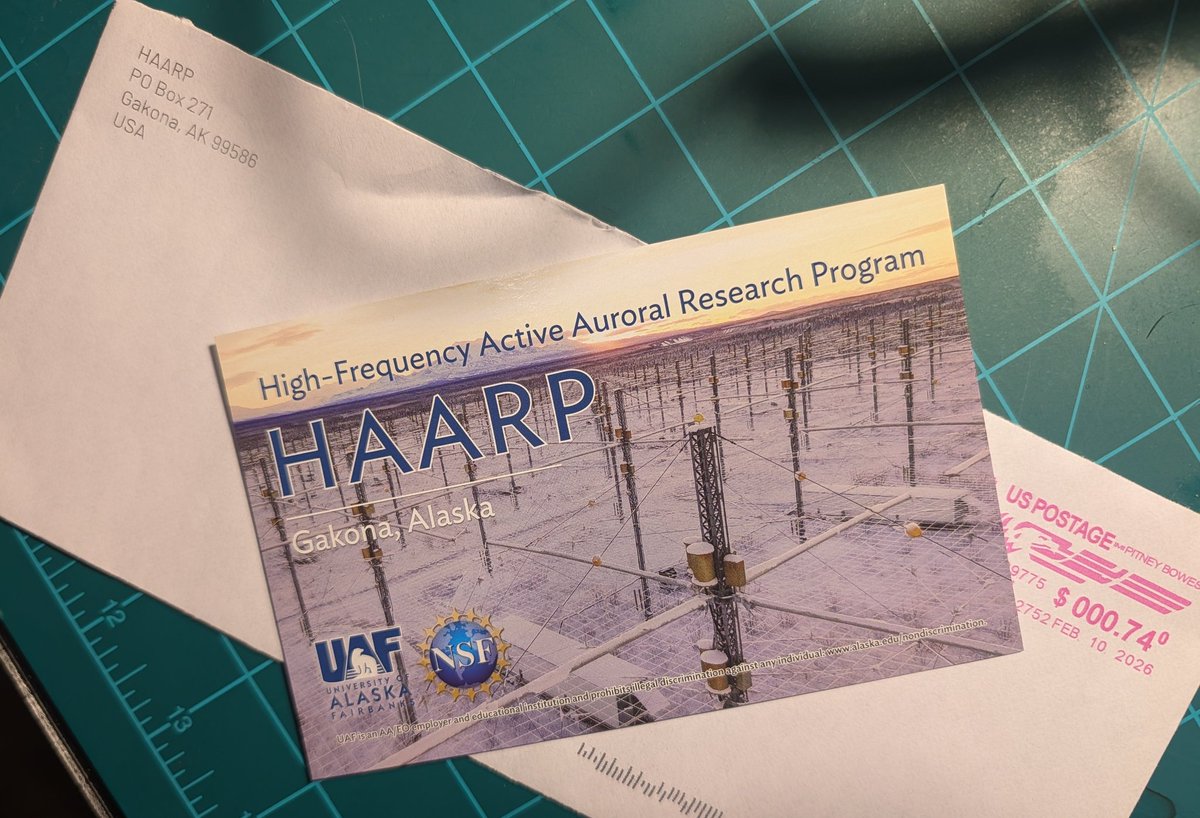
The strange world of 2.8 to 10 MHz
That range of HF (2.8 to 10 MHz) is a strange place. In the area between the 30- and 160-meter ham bands, there’s a wild mix of utility signals, sweeps, shortwave broadcasters, standard time, amateur, scientific, maritime, aviation, and things that don’t identify themselves. There’s a lot to hear but often little to tell exactly what you’re listening to. One of the fun and exciting things to do in the hobby of radio is to learn how noise can take on an identifiable shape.
I’d heard of HAARP, but never really knew how, where, or when to dial it up until I saw a post from Peter Vogel on X. Next thing I knew, I was hearing all these strange transmissions on my SDR.
Signals that turned out to be HAARP
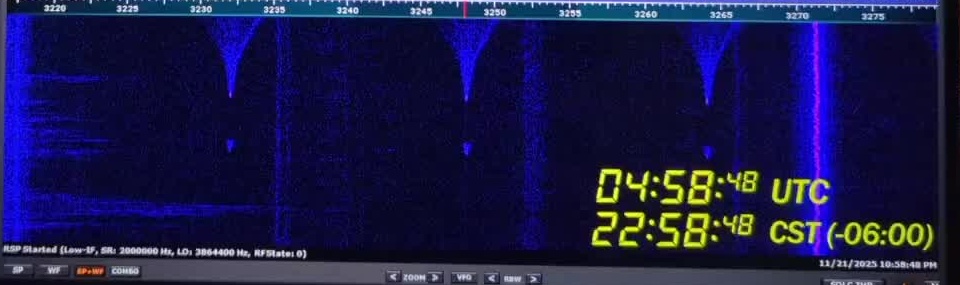
Among all that noise, some signals stood out enough to actually chase down. The most recognizable is a symmetrical sweep sometimes called a “Christmas tree” signal. It initially threw me off that the Christmas trees I saw were upside down on the SDR waterfall.
I appreciate Peter posting about the HAARP activities. It’s interesting how a good post can kick-start a person’s journey into a new world of learning. He’s a good one to follow on X.
My first reported HAARP reception: November 2025. Recording posted in the video below.
Here’s a still from that November 2025 recording: the same pattern shown earlier on this page, frozen at 0458 UTC inside the window that HAARP later confirmed.
Listening to HAARP is part of the fun; however, picking it out by ear alone isn’t easy. What I’ve heard so far: swishes, swooshes, chirps, and blurps. When a large transmission starts, it can sound like a powerful electrical generator ramping up. For an amateur, though, the visual waterfall display on an SDR makes the signal far easier to identify than your ears alone can.
A short history
The Air Force and Navy proposed HAARP in the early 1990s, with DARPA funding from the outset, to study how the ionosphere affects radio communication and navigation. Construction started in 1993 near Gakona, Alaska, chosen for sitting in the auroral zone. An early prototype was online by 1994: 18 antenna elements, roughly 360 kW.
The array grew from there. The current 180-element setup was completed in 2007, built by BAE Systems Advanced Technologies. The Air Force and Navy jointly ran the program from the early 1990s through 2014, when the Air Force announced it would shut HAARP down. The University of Alaska Fairbanks has operated it since August 11, 2015, according to HAARP’s own website.
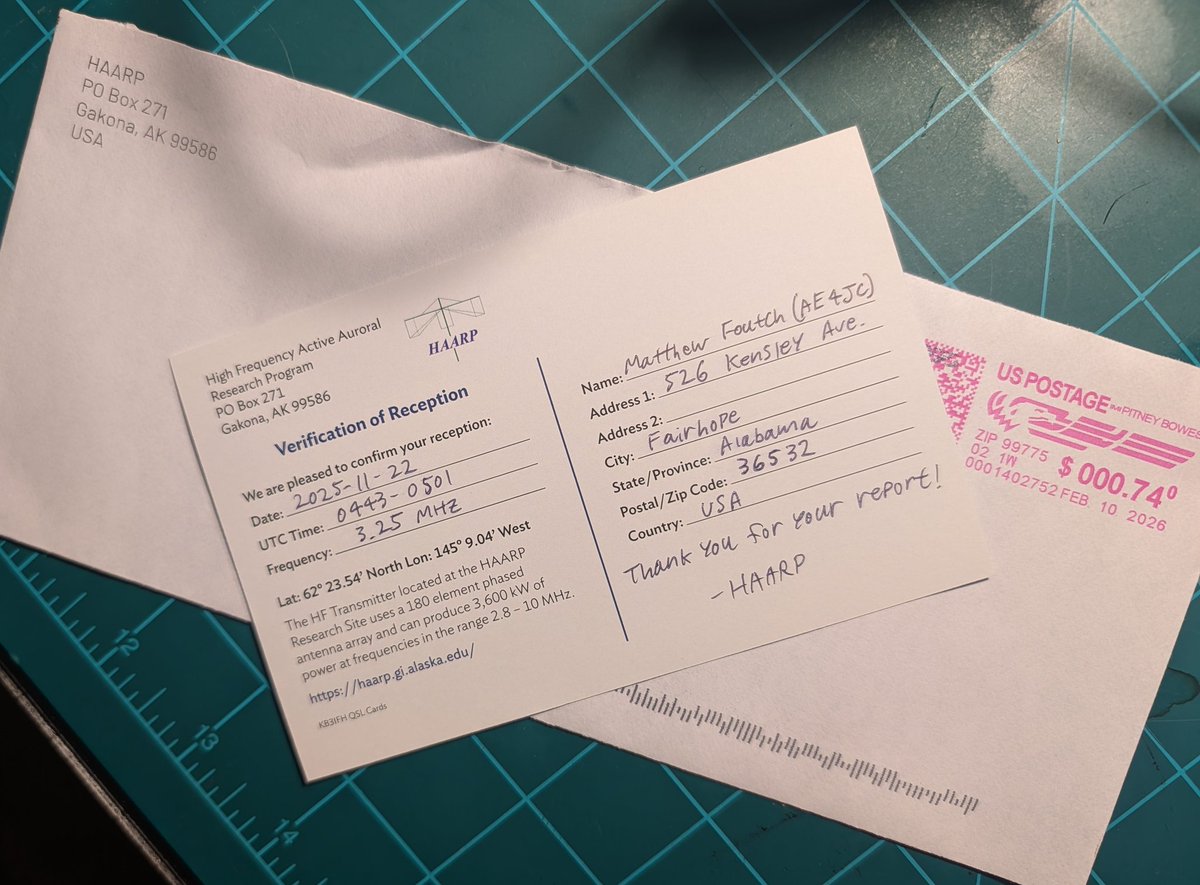
It posts its own transmission schedule and frequencies publicly at haarp.gi.alaska.edu/transmissions, which is how I know when to listen. My QSL card from the facility, shown further down, gives its own numbers for where things stand today, in HAARP’s own words: “The HF Transmitter located at the HAARP Research Site uses a 180 element phased antenna array and can produce 3,600 kW of power at frequencies in the range 2.8 - 10 MHz.”
The submission form and the confirmation card
HAARP runs its own reception report form, open to “amateur radio operators around the world” during an active research campaign. It asks for the date, UTC time, frequency, your callsign, reception details, your grid square or location, and whether you want a QSL card back. HAARP says to expect a few weeks between submitting a report and getting a confirmation.
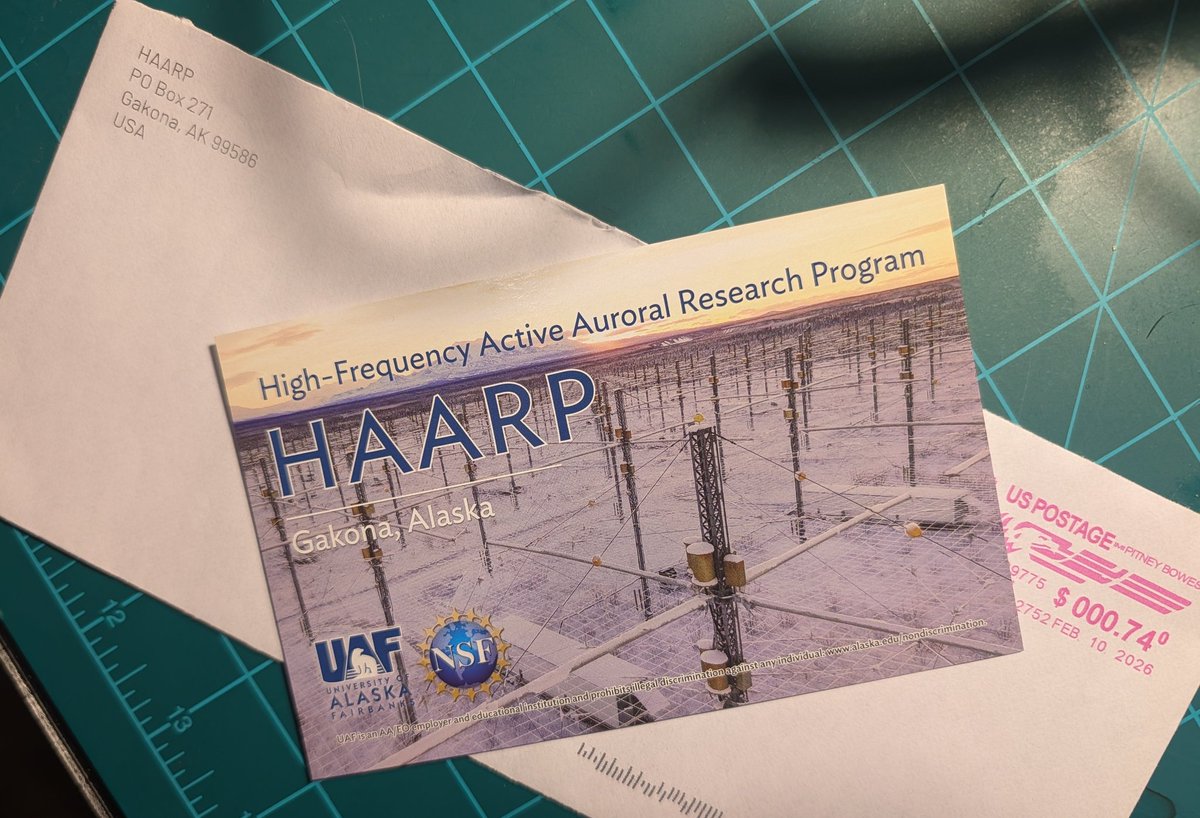
I sent in a report on my November 2025 signal reception and was thrilled to receive a signed “Verification of Reception” card confirming that it really was a HAARP transmission I had picked up on my screen: 2025-11-22, 0443–0501 UTC, 3.25 MHz.
Now that I know what to look for
It’s easier to confirm the signals now that I know a bit more about what they look like. Although now, of course, I’m interested in what other shapes are formed and how that comes to be.
Earlier this week I received an email from HamSCI, the ham radio citizen-science network, tipping the community off to an active HAARP campaign.
Within a few minutes of the notice, I had my antenna deployed and SDR listening. It hasn’t yet required a mega antenna for me to receive HAARP in EM60. Here’s what I used this time: Go2Antenna.
Same process as before: check the schedule, tune the frequency, listen, log it. Here’s a video of that signal. There were some similarities and some differences in the signals this time. But it sure looked like HAARP.
Someone who saw that post did their own read on it, explaining why the signal looked more like HAARP than ordinary HF traffic. I appreciate them taking the time to do this.
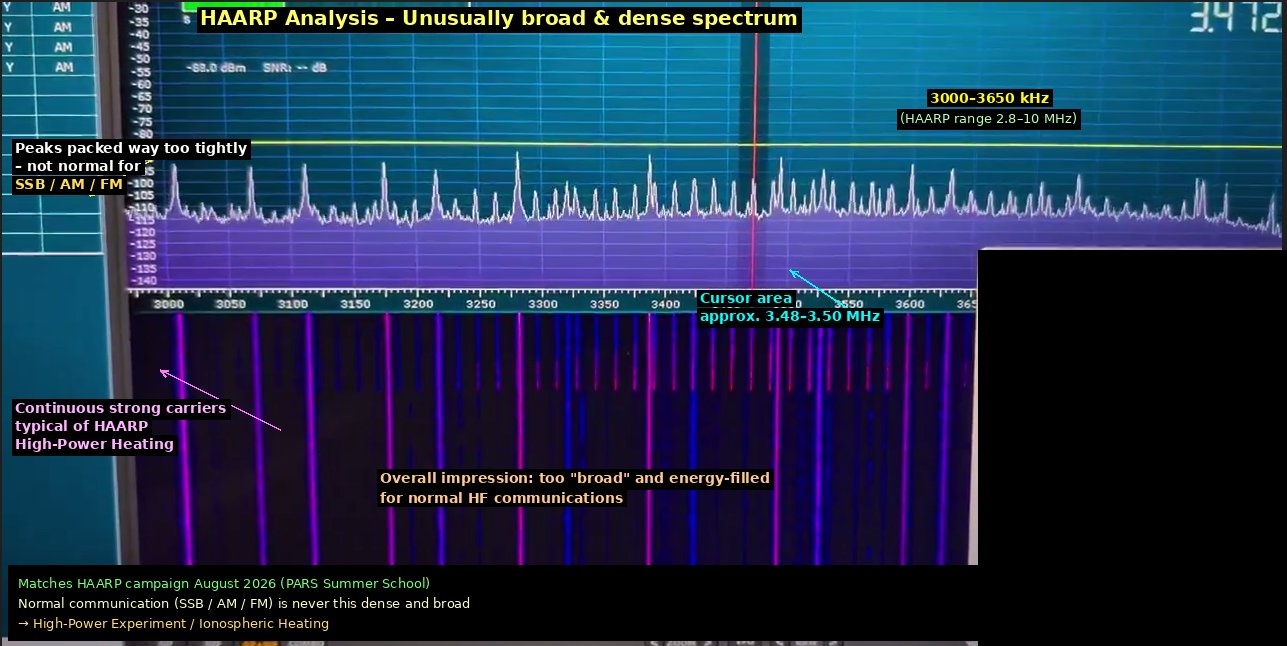
Analysis by @elizaonsteroids on X, replying to my post above.
That’s the same process that earned the November 2025 QSL above: check the schedule, match the signal to what’s actually on the air, and if it holds up, send in a report. I’ve logged this one the same way. Whether it earns its own card is a question for the reception log.
Once you know the schedule and what the signal actually looks like on a waterfall, picking it back out of all that other HF noise gets a lot easier. The setup on my Station page is enough to hear it, though a decent HF antenna and a low noise floor can matter more than anything fancy in the receiver itself. Whether you actually hear anything on a given night still depends on your antenna, your noise floor, and whether the path from Gakona cooperates.
I’ll keep logging what I hear on the HAARP Reception Log page as it happens and am interested in learning more.
Verify you're not a bot to load comments: