6m FT8 Radio System Performance Comparison
May 2026
Ham Radio is full of surprises… 📡
One of the great things about the ham radio hobby is the opportunity it provides to share and learn with friends.
Last weekend, during a six-meter Sporadic-E opening, I watched my friend Corey (KQ4TPD) match me nearly contact for contact as I was working FT8 with WSJT-X. Our stations are only about 18 miles apart. From what I observed for a short while, I figured we would work most of the same stations. But a full comparison of our logbooks turned out quite different from what I expected.
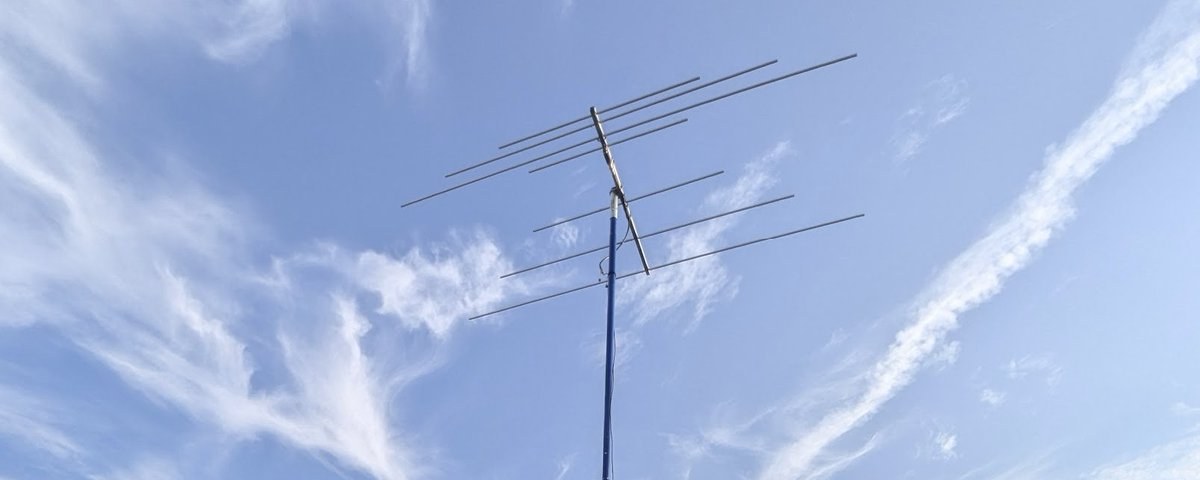
I was running 200 watts into a two-element horizontally polarized Yagi at 20 feet. Because Corey was knocking down stations so efficiently, I assumed he was using his new Moxon antenna.
Later, I learned he was only running 40 watts into an ATAS vertical mounted on his truck at about 5 feet high.
The comparison of our ADIF logs showed Corey’s low-power mobile setup outperforming mine on several key metrics — more DX contacts, more unique stations, and better overall reach during the opening.
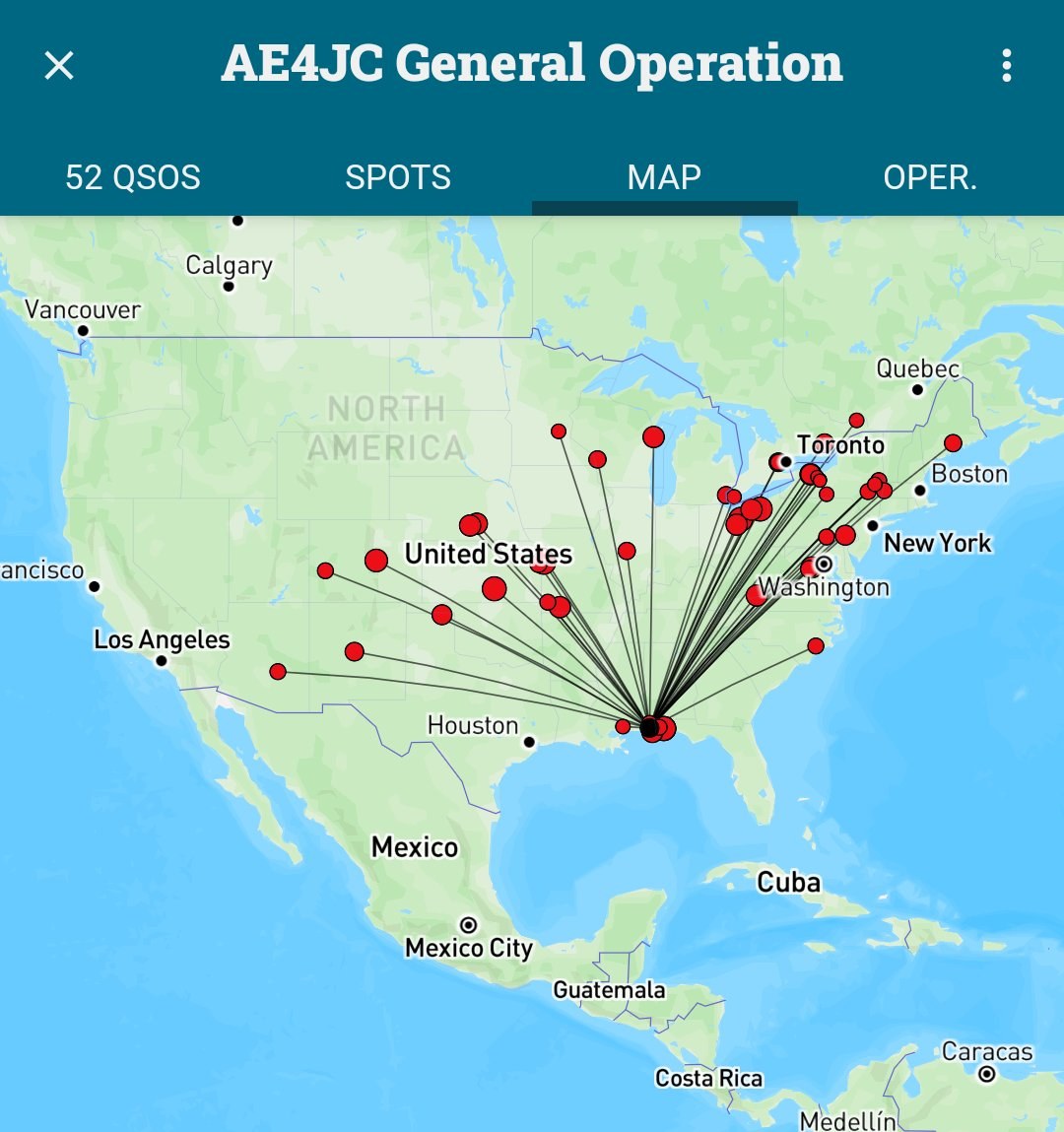
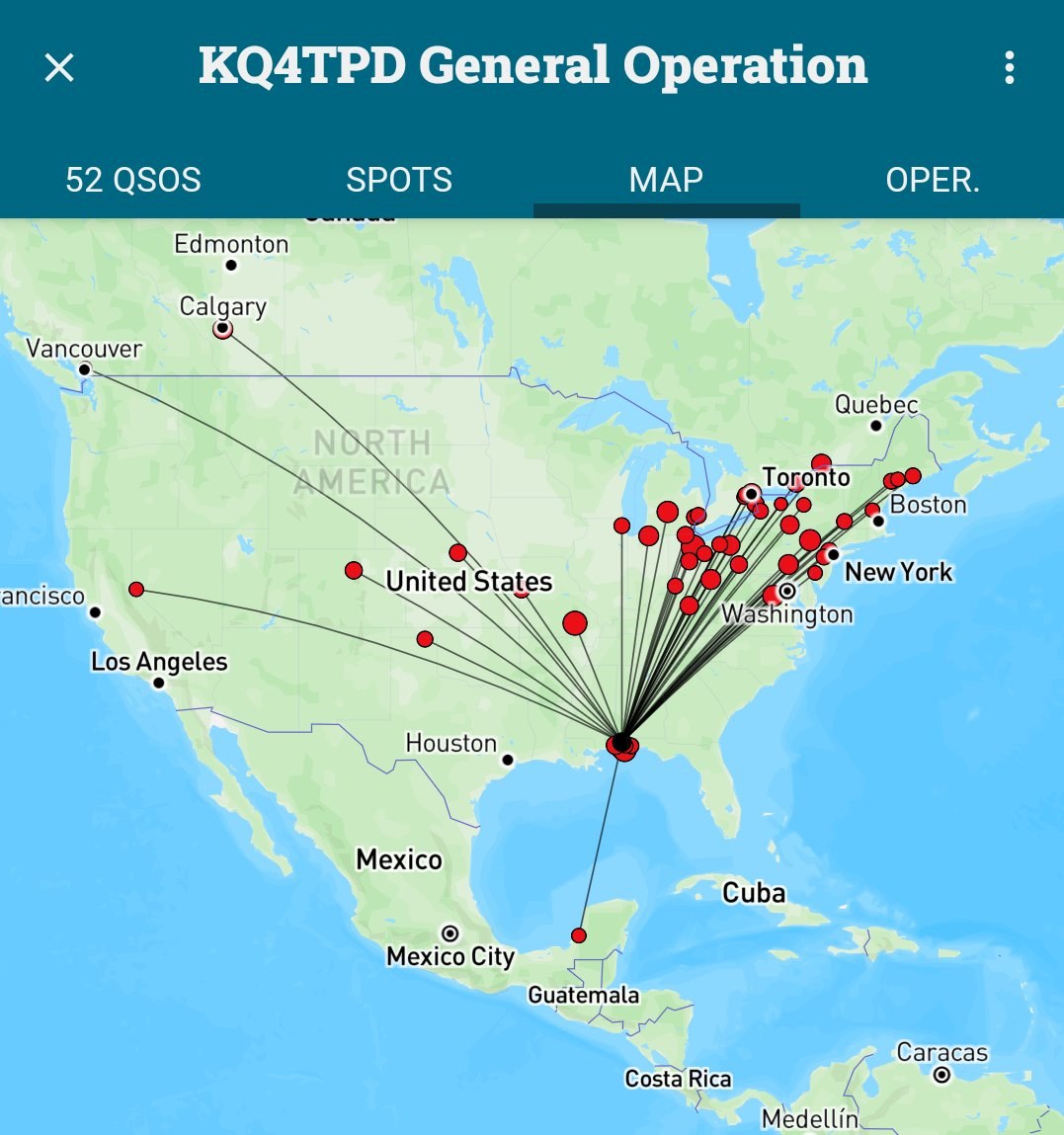
Wait… less power, less gain, and in many ways better performance…
How does that add up? Where’s the wildcard?
Both show exactly 52 QSOs, but the geographic distribution is noticeably different, especially Corey’s stronger western reach.
AE4JC vs KQ4TPD Setup Comparison
Similarities:
- Same general area (stations only ~18 miles / 28 km apart)
- Same Sporadic-E opening and band conditions (May 10–11, 2026)
- Both running FT8
Differences:
- Location / Elevation: Spanish Fort, AL (grid EM60BS, 150 ft ASL) in an open clearing vs Fairhope, AL (grid EM60BM, ~115 ft) in a subdivision surrounded by houses
- Power output: 200 W vs 40 W
- Antenna: 2-element horizontal Yagi (directional) vs ATAS vertical (omni)
- Antenna height: 20 feet vs ~5 feet (truck-mounted)
- Polarization: Horizontal vs Vertical
- Station type: Fixed base vs Mobile
- Feedline: ~150 ft LMR-400 vs ~20 ft
- Software: WSJT-X (PC) vs iFTX on iPhone
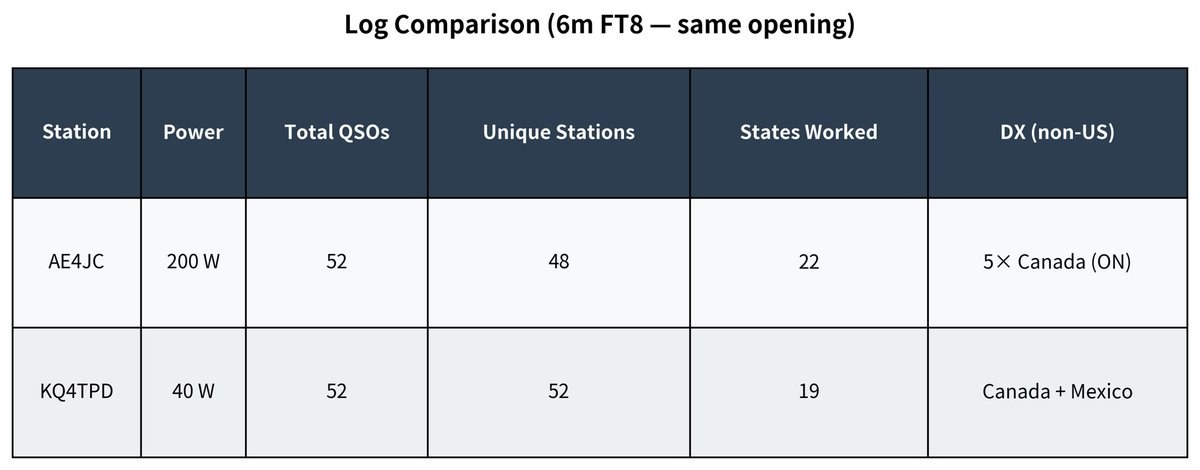
Together, we worked 86 unique callsigns. We shared 14 mutual contacts (same propagation paths open to both), but each of us also worked many stations that the other didn’t. KQ4TPD caught early Mexico (XE3K), West Coast stations, and a few extra New England / Midwest paths I missed.
Deeper Log Insights
- KQ4TPD achieved the same number of QSOs using only 20 % of my power
- Average SNR on mutual contacts was very close (I saw ≈ –6 dB; he saw ≈ –9 dB)
- I generally decoded the mutual stations a bit earlier (higher power + directional antenna advantage)
- Local Alabama short-skip contacts worked well for both of us
I’ve been working to improve my station for quite a while, adding power and gain. It did everything I expected. It was satisfying to steer the beam and watch new areas light up on the GridTracker map as I pointed in a new direction. That was fun. But I’m still surprised by and quite curious about how well Corey did with his lower-power mobile setup.
Lessons Learned -or- Working Theories?
Once signals get loud enough for FT8 to decode reliably, extra power and antenna gain don’t always translate into significantly more contacts. Also, an omnidirectional antenna can outperform a directional one under shifting propagation conditions because it can hear and work in all directions at all times.
I expect the difference in our stations to show up more clearly on SSB (where the power and gain advantage would likely net more stations), but we haven’t done that side-by-side test … yet.
As the season progresses, it will be neat to watch how our relatively new lower-power/gain stations stack up against the local big guns — KW4OV, W4EFT, WA4USA, and WA3GWK.
KW4OV Best-Practice Station (local benchmark)
Key Specs:
- Antenna: 4-element InnovAntennas Loop Fed Array (LFA) Yagi
- Height: ~30 feet
- Power: 100 watts
- Feedline: LMR-600 (low-loss coax) (see my earlier post here: https://x.com/mwfoutch1/status/1934318459803861422)
This experience reminds me again that it’s best to view the entire operation as a complete system. With all components contributing together towards the performance, not just the antenna or the radio, but the coax, grounding, height, location, terrain, and everything in between.
Ham radio keeps teaching humility, creativity, and the joy of experimentation.
What’s your favorite station setup for 6 meters?
Drop your favorite rig, power level, and antenna details in the replies — especially if you’re chasing FT8 or Es openings. I’d love to hear what’s working for you!
73 de AE4JC
Verify you're not a bot to load comments: